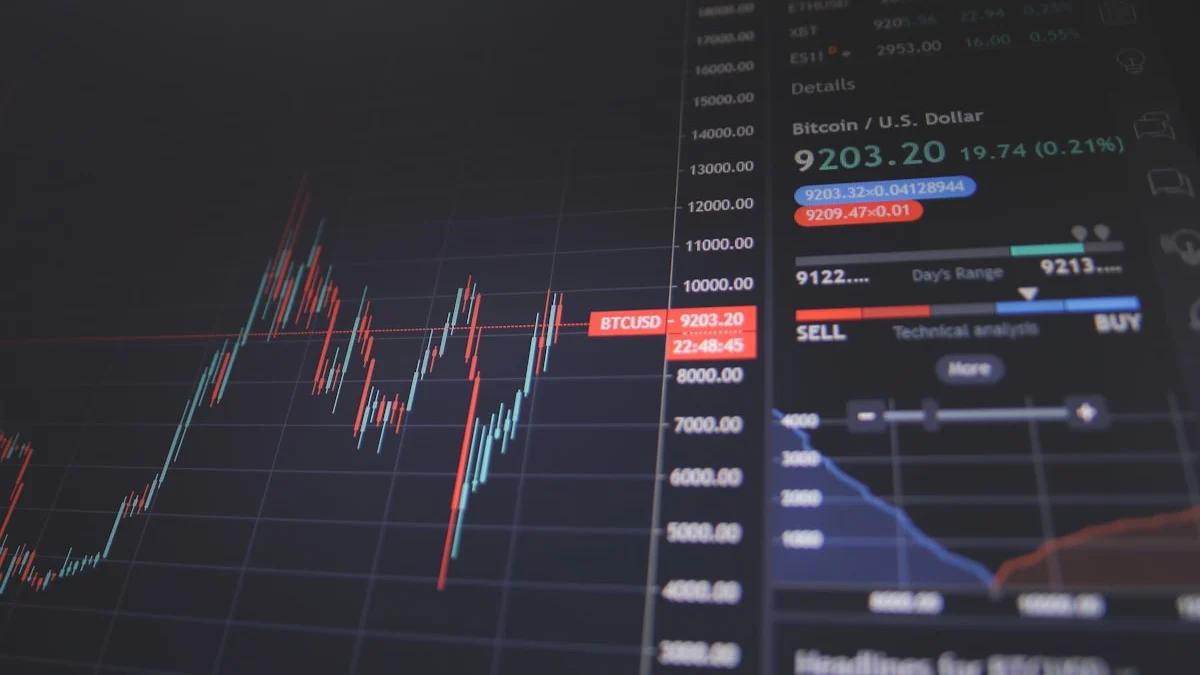
Mumbai witnessed an unprecedented wave of bullish sentiment as the Indian stock market rally Sensex roared to life, with benchmark indices Sensex and Nifty recording one of their most significant single-day gains in recent memory. The monumental surge, which saw the S&P BSE Sensex climb past the critical 74,000-point psychological barrier and the Nifty 50 breach 22,500, was directly attributed to the historic announcement of a US-Iran Gulf Peace Accord. This diplomatic breakthrough, brokered after months of intense negotiations, has dramatically de-escalated geopolitical tensions in the crucial Middle East region, sending ripples of relief and optimism across global financial markets, with India emerging as a primary beneficiary.
On Monday, October 28, 2024, trading commenced with a robust gap-up opening, signaling strong investor confidence. The S&P BSE Sensex rocketed by an astonishing 1,875.32 points, or 2.59%, to close at 74,312.87, marking its highest closing ever. Similarly, the Nifty 50 index surged by 518.70 points, or 2.37%, settling at 22,589.45. This historic surge solidified the Indian stock market rally Sensex as a major global event, capturing headlines worldwide. The broader market also painted a picture of widespread gains, with the BSE MidCap index advancing by 2.1% and the BSE SmallCap index by 1.9%, indicating a broad-based rally that swept across market capitalizations. Trading volumes were exceptionally high, with the National Stock Exchange (NSE) recording an equity turnover of approximately ₹1.85 trillion, significantly above its daily average, underscoring the fervent participation of both institutional and retail investors.
The primary catalyst for this euphoric market response and the subsequent Indian stock market rally Sensex was the "Gulf Stability and Economic Cooperation Accord," signed in Geneva on October 26, 2024. This landmark agreement, facilitated by a consortium of European and Asian mediators, saw the United States and Iran commit to a comprehensive framework for de-escalation, economic cooperation, and non-aggression in the Persian Gulf. Key provisions included a mutual cessation of hostile rhetoric, a phased lifting of specific economic sanctions against Iran in exchange for enhanced transparency on its nuclear program, and a commitment to joint initiatives for maritime security and regional economic development. The immediate and most profound impact on global markets was the sharp decline in international crude oil prices. Brent crude futures plummeted by over 8%, dropping from an average of $88 per barrel to $80.50, while WTI crude followed suit, shedding 7.5% to settle at $76.20 per barrel. This sudden relief from energy cost pressures was a major boon for net oil-importing nations like India, immediately fueling the Indian stock market rally Sensex.
Market analysts were quick to interpret the implications. Dr. Anjali Sharma, Chief Economist at Zenith Capital, commented, "This accord is a transformative event, not just for global geopolitics but crucially for emerging economies heavily reliant on imported energy. India, in particular, stands to gain immensely from stabilized and potentially lower crude oil prices, which directly impact inflation, current account deficit, and corporate profitability. The Indian stock market rally Sensex reflects this newfound optimism." Her sentiments were echoed by Mr. Rajeev Kapoor, Head of Equity Research at Dalal Street Analytics, who noted, "We witnessed unprecedented buying interest across the board today, particularly in sectors sensitive to crude oil prices such as aviation, logistics, paints, and manufacturing. The Sensex's breach of 74,000 is a strong psychological victory, signaling robust investor confidence in India's economic resilience amidst a more stable global environment and reinforcing the Indian stock market rally Sensex."
Why It Matters
The US-Iran Gulf Peace Accord holds immense significance for India's macroeconomic landscape and its financial markets. Firstly, as the world's third-largest oil importer, a sustained drop in crude oil prices directly translates into substantial savings on India's import bill. This can significantly narrow the current account deficit (CAD), strengthen the Indian Rupee against the US Dollar, and ease inflationary pressures. Lower inflation provides the Reserve Bank of India (RBI) greater flexibility to maintain an accommodative monetary policy or even consider future interest rate cuts, which would further stimulate economic growth and corporate investment. The robust performance of the Indian stock market rally Sensex is not merely a fleeting reaction but a reflection of these deep-seated economic benefits. Secondly, reduced geopolitical risk premium in the Middle East enhances global trade stability, benefiting India's vast export-import network and its diaspora in the Gulf region. Thirdly, the improved global sentiment is likely to attract increased Foreign Portfolio Investment (FPI) and Foreign Direct Investment (FDI) into India, bolstering capital inflows and supporting asset valuations. The Indian stock market rally Sensex is a clear indicator of global capital re-rating India's investment attractiveness.
Furthermore, the accord’s potential to unlock new trade routes and foster regional stability could open up new avenues for Indian businesses, particularly those involved in infrastructure development, energy, and services. The long-term implications for India's energy security strategy, allowing for greater diversification and potentially more favorable pricing agreements, are also profound. This geopolitical stability serves as a crucial foundation for India to pursue its ambitious economic growth targets, positioning it as a more reliable and attractive investment destination on the global stage. The sustained positive momentum of the Indian stock market rally Sensex is crucial for broader economic stability and capital formation.
Underlying Technology
The rapid and efficient processing of such a massive influx of orders and the seamless execution of trades during Monday's historic rally underscore the robust and sophisticated technological infrastructure underpinning the Indian stock market. Both the National Stock Exchange (NSE) and the Bombay Stock Exchange (BSE) operate on advanced, low-latency trading platforms designed to handle extreme volatility and high transaction volumes. For instance, the NSE's 'NOW' (Neat on Web) and BSE's 'BOLT' (BSE Online Trading) systems leverage high-frequency trading (HFT) algorithms and co-location facilities, allowing institutional investors to execute trades in microseconds. These platforms are built on distributed architectures, ensuring high availability and fault tolerance, critical during periods of intense market activity. The ability of the Indian exchanges to flawlessly manage the intense trading volumes spurred by the Indian stock market rally Sensex highlights their technological prowess.
Real-time data dissemination systems, employing sophisticated data analytics and machine learning algorithms, played a pivotal role in providing investors with immediate access to market information, price movements, and order book depths. This transparency, facilitated by high-speed fiber optic networks and cloud-based infrastructure, empowered traders to make informed decisions swiftly. Furthermore, advanced surveillance technologies, including AI-powered anomaly detection systems, were continuously monitoring for any unusual trading patterns or manipulative activities, ensuring market integrity and fairness even amidst the unprecedented surge. The seamless clearing and settlement processes, managed by entities like the National Securities Clearing Corporation Ltd (NSCCL) and Indian Clearing Corporation Ltd (ICCL), which operate on a T+1 (trade date plus one day) settlement cycle, ensured that the massive volume of transactions was processed without any operational glitches, reinforcing investor confidence in the reliability of India's financial market infrastructure. The seamless operation during the intense trading volumes of the Indian stock market rally Sensex showcased the resilience of its tech backbone.
Future Implications
The immediate surge in the Indian stock market rally Sensex is likely just the beginning of a potentially sustained period of bullish sentiment, provided the Gulf Peace Accord holds firm. In the short term, sectors directly benefiting from lower crude oil prices, such as airlines (IndiGo, SpiceJet), logistics companies, paint manufacturers (Asian Paints, Berger Paints), and tire companies (MRF, Apollo Tyres), are expected to see continued positive momentum due to improved margins and reduced operational costs. The banking and financial services sector (HDFC Bank, ICICI Bank) could also gain from increased credit demand and a more stable macroeconomic environment. Analysts suggest that the current momentum driving the Indian stock market rally Sensex could extend into the medium term, contingent on sustained global stability.
Looking further ahead, the enhanced global geopolitical stability could pave the way for a more predictable and favorable environment for foreign investment. India's appeal as a manufacturing hub under initiatives like 'Make in India' could strengthen, attracting multinational corporations seeking stable supply chains. The accord might also encourage greater diplomatic engagement between India and the Gulf nations, potentially leading to new trade agreements and investment opportunities. The long-term implications of this accord could further solidify the gains seen in the Indian stock market rally Sensex, attracting sustained foreign capital. However, challenges remain. The long-term success of the accord hinges on its sustained implementation and the willingness of all parties to adhere to its terms. Any resurgence of tensions could quickly reverse market gains. Furthermore, while lower crude oil prices are beneficial, India still needs to address domestic structural reforms, manage fiscal deficits, and boost employment to ensure inclusive and sustainable economic growth. The euphoria of the current Indian stock market rally Sensex must be tempered with a focus on these underlying economic imperatives.
The trajectory for India's economy and its markets appears significantly brighter post-accord. Investors will be closely watching for signs of sustained geopolitical calm, the RBI's monetary policy decisions, and the government's fiscal measures in response to the improved economic outlook. The current rally serves as a powerful testament to the interconnectedness of global events and the swift, decisive reaction of a technologically advanced and resilient financial market like India's. The recent Indian stock market rally Sensex stands as a testament to the market's agility and its capacity to rapidly price in significant geopolitical shifts.
In conclusion, the landmark US-Iran Gulf Peace Accord has delivered a much-needed shot in the arm to the Indian stock market, driving the Sensex and Nifty to unprecedented highs. This surge reflects a profound shift in global risk perception, offering India a significant economic tailwind through reduced oil prices and enhanced geopolitical stability, further solidifying the Indian stock market rally Sensex. While the immediate future appears promising, sustained economic reforms and vigilant monitoring of the accord's implementation will be crucial to translate this market euphoria into long-term, inclusive prosperity for the nation.